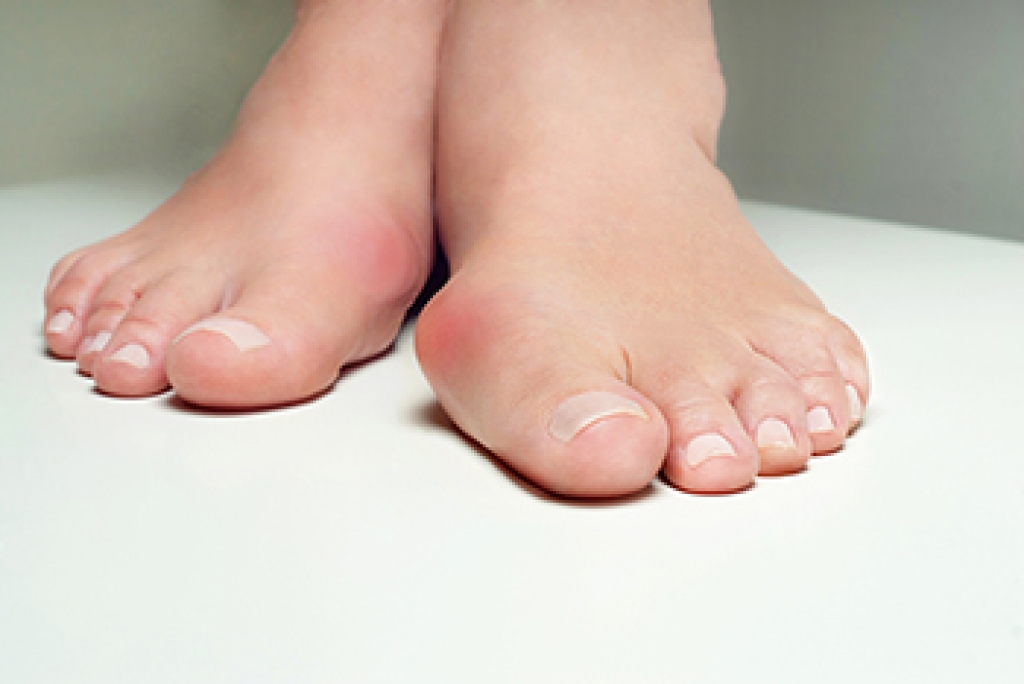
A bunion develops when the big toe gradually shifts toward the smaller toes, causing a noticeable bump on the side of the foot and irritation around the big toe joint. This change, known medically as hallux valgus, often leads to soreness in the toes, redness around the joint, and areas of thickened skin under the ball of the foot. Some people experience numbness if nearby nerves become irritated, and stiffness in the big toe can make walking uncomfortable. Shoes that lack adequate support or have narrow designs often increase pressure on the joint. A podiatrist can evaluate the alignment of the toes, check joint movement, and recommend a treatment plan. Supportive footwear with a wide toe box, custom orthotics, and padding can ease pressure on the joint, while surgery corrects the underlying misalignment when pain is severe. If you have a painful bunion, it is suggested that you make an appointment with a podiatrist for a diagnosis and treatment.
If you are suffering from bunions, contact Philip C. Caswell, DPM of Family Foot & Ankle Care. Our doctor can provide the care you need to keep you pain-free and on your feet.
What Is a Bunion?
A bunion is formed of swollen tissue or an enlargement of boney growth, usually located at the base joint of the toe that connects to the foot. The swelling occurs due to the bones in the big toe shifting inward, which impacts the other toes of the foot. This causes the area around the base of the big toe to become inflamed and painful.
Why Do Bunions Form?
Genetics – Susceptibility to bunions are often hereditary
Stress on the feet – Poorly fitted and uncomfortable footwear that places stress on feet, such as heels, can worsen existing bunions
How Are Bunions Diagnosed?
Podiatrists often perform two tests – blood tests and x-rays – when trying to diagnose bunions, especially in the early stages of development. Blood tests help determine if the foot pain is being caused by something else, such as arthritis, while x-rays provide a clear picture of your bone structure to your provider.
How Are Bunions Treated?
- Refrain from wearing heels or similar shoes that cause discomfort
- Select wider shoes that can provide more comfort and reduce pain
- Anti-inflammatory and pain management drugs
- Orthotics or foot inserts
- Surgery
If you have any questions, please feel free to contact our office located in Sparta, NJ . We offer the newest diagnostic and treatment technologies for all your foot care needs.
